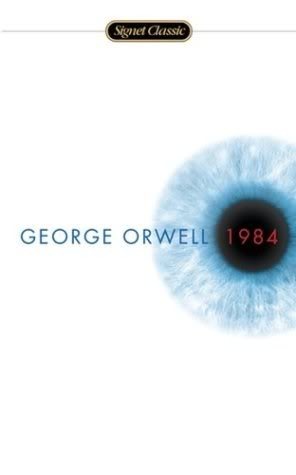
Title: 1984 Author: George Orwell Publication Date: June 8, 1949 Publisher: Signet Classics Pages: 328 Add to Goodreads
The year 1984 has come and gone, but George Orwell's prophetic, nightmarish vision in 1949 of the world we were becoming is timelier than ever. 1984 is still the great modern classic of "negative utopia" -a startlingly original and haunting novel that creates an imaginary world that is completely convincing, from the first sentence to the last four words. No one can deny the novel's hold on the imaginations of whole generations, or the power of its admonitions -a power that seems to grow, not lessen, with the passage of time.
As a lover of dystopian fiction, 1984 is one I've heard about over and over for as long as I can remember. I've always had some interest in reading it, but classics from this time period usually bore me to tears and I was scared to give it a try. When sales surged after the recent election, I officially added it to my TBR and finally decided to read it a few weeks ago. I should've listened to my gut.
This book started interestingly enough, jumping right into the world building. I was intrigued by the disturbing society and attempted to draw the parallels between this world and our society. The main character (I don't remember his name - was it mentioned?) was a bit of a rebel, which I liked. I enjoyed the little tidbits about the world before, but really wished there was more of it. I definitely would like to know more about how the world got to the state it was in.
The other thing I wished there was more of (or any of) was action. So much of what I read was world building, I would have loved to have seen anything happen whatsoever! The world was interesting, yes, but not interesting enough to keep me turning pages.
Alas, I gave up at under 50% in. It's very possible that my issues with this book were solved a few pages after I finally gave up, but I just couldn't force myself to continue. I know that there was a movie made and maybe I'll give that a try to see what happens after I gave up!
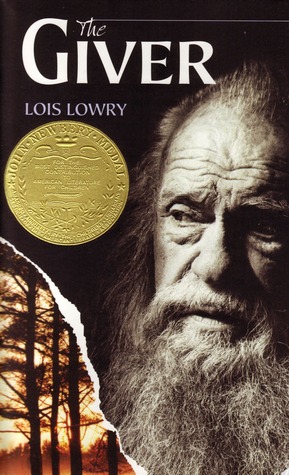
Title: The Giver Author: Lois Lowry Publication Date: April 26, 1993 Publisher: Laurel-Leaf Books Pages: 179 Add to Goodreads
In a world with no poverty, no crime, no sickness and no unemployment, and where every family is happy, 12-year-old Jonas is chosen to be the community's Receiver of Memories. Under the tutelage of the Elders and an old man known as the Giver, he discovers the disturbing truth about his utopian world and struggles against the weight of its hypocrisy. With echoes of Brave New World, in this 1994 Newbery Medal winner, Lowry examines the idea that people might freely choose to give up their humanity in order to create a more stable society. Gradually Jonas learns just how costly this ordered and pain-free society can be, and boldly decides he cannot pay the price.
The Giver is set in a future society which is at first presented as a utopia and gradually appears more and more dystopic, so could therefore be considered anti-utopian. The novel follows a boy named Jonas through the twelfth year of his life. Jonas' society has eliminated pain and strife by converting to "Sameness", a plan which has also eradicated emotional depth from their lives. Jonas is selected to inherit the position of "Receiver of Memory," the person who stores all the memories of the time before Sameness, in case they are ever needed to aid in decisions that others lack the experience to make. As Jonas receives the memories from his predecessor—the "Giver"—he discovers how shallow his community's life has become.
My brother has been trying to get me to read The Giver for years. It's one of his favorite series and I've heard him talk about it over and over but, for some reason, just never got around to picking it up. If I had to guess, it's probably because it's a classic and I don't usually love those.
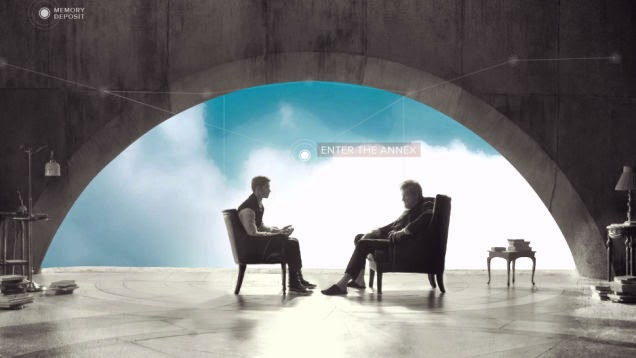
I should preface this review by saying that I saw the movie first. I know, I know. But I did. The movie was actually pretty good! I really did enjoy it... until I started reading message boards and realizing how different it was from the source material. That is why I decided to finally read it and I'm really glad I did!
The Giver is definitely a heck of a lot different than the movie that was recently released. Honestly, I did enjoy some of the changes in the film and I can totally understand why they were made. I really am not sure if the book could have been translated exactly to screen. But I digress.
The book opens with Jonas as he prepares to get his assignment - his job, essentially. Much is revealed about the workings within the community he lives in. There is a huge focus on precision of language, sameness, and honesty, to name a few. It quickly becomes very obvious that this is a community run by very strict guidelines that are never -not- met. Jonas, however, is a questioner. Though he feels guilty, he doesn't do everything exactly the right way and sometimes sees strange things. This starts to make sense to Jonas once he is given the assignment of Receiver of Memory.
The previous Receiver (now the Giver) explains a great many things to Jonas through memories. Jonas learns of how things were before the world became the way it is. He learns about colors and pain and love. But these things that previous Receivers were content (or not) with are not enough for Jonas. He always wants to know more and asks all the why's.
I greatly enjoyed the characters in this book, although they were obviously very strange. I liked Jonas a lot simply because he was not content with what he was being told and he wasn't content with the way the world had become. The Receiver, though sometimes gruff, had the feeling of a grandfather who was concerned and wanted his grandson to have (know) everything. Fiona and Asher were also interesting characters, though I would have liked to have known more about them.
The story of the Giver is very imaginative. It made me laugh at times and it also made me cringe at a few moments (okay, more than a few). The only downside for me was that I didn't feel like I knew enough. Like Jonas, I wanted to know more! And this book left me with more questions than answers. I guess that the remaining books share a little more about what may have happened, but I feel like The Giver itself was abruptly ended and needed more explanation.
Back to the film, I liked the touches of romance that were only very briefly hinted at in the book, though I did like how the book explained more about how romance within the community worked. I also felt like the book did a better job with their assignments since Asher's especially seemed a little ridiculous in the movie. And while the movie's landscapes seemed a little far-fetched, I did like that it was better realized, while the book left pretty much everything completely to the imagination. Overall, I liked both the book and the movie for different reasons and I'd definitely recommend both!
Title: The Hobbit Author: J.R.R. Tolkien Publication Date: September 21, 1937 Publisher: Houghton Mifflin (this edition) Pages: 385 Add to Goodreads
In a hole in the ground there lived a hobbit. Not a nasty, dirty, wet hole, filled with the ends of worms and an oozy smell, nor yet a dry, bare, sandy hole with nothing in it to sit down on or to eat: it was a hobbit-hole, and that means comfort. Written for J.R.R. Tolkien’s own children, The Hobbit met with instant critical acclaim when it was first published in 1937. Now recognized as a timeless classic, this introduction to the hobbit Bilbo Baggins, the wizard Gandalf, Gollum, and the spectacular world of Middle-earth recounts of the adventures of a reluctant hero, a powerful and dangerous ring, and the cruel dragon Smaug the Magnificent. The text in this 372-page paperback edition is based on that first published in Great Britain by Collins Modern Classics (1998), and includes a note on the text by Douglas A. Anderson (2001). Unforgettable!
After purchasing and watching “The Desolation of Smaug” for the first time since seeing it in theaters, I realized how much I enjoyed the movie. I then immediately came to the conclusion that I couldn’t wait till the third installment in the motion picture trilogy, “The Battle of the Five Armies,” was released this December to find out how the story resolved. The only solution was to pick up my copy of The Hobbit and attempt to read it again, a task I had not attempted since my sister first introduced the book to me in elementary school.
My attitude towards the book was influenced by my memory of being unable to finish it as a 4th or 5th grader; however, I was pleasantly surprised to find that I loved the writing style of The Hobbit. I find it amazing that J.R.R Tolkien could be so intelligent and continually work in academia, yet could still write fiction that it is enjoyable and appropriate for leisure reading.
I decided to read the book after watching the first two movies in the trilogy and was surprised at just how different the book and movies are from one another. The most notable difference was the presentation of Bilbo. In the novel, Bilbo is presented essentially as a badass who assumes the role of the leader of the fellowship of dwarfs on their journey. This is almost in total contrast to the timid Bilbo who is constantly in need of help that has been shown in the cinematic trilogy thus far. Also, as is consistent with the move of a novel from literature to the big-screen, the story of The Hobbit takes place in a much longer time frame in the novel than the movies.
As a whole, I enjoyed reading the Hobbit from the beginning to the end. If I had to criticize any aspects of the book they would be in relation to how the story is told: first, the battles in the books seemed short and uneventful; second, the resolution of Smaug’s reign was a bit weak (this wont be discussed since it is the major plot line for the upcoming movie); third, there were many pages full of verses of songs, which became more tedious than entertaining. Though all three of these aspects could be seen as negatives, in a work of literature they work in perfect harmony. I believe that without comparing the book to the movies I would have no criticism at all of The Hobbit. Peter Jackson’s movies have likely simply set the entertainment expectation at a level that is nearly unattainable without the stimulation presented through a visual format.
Reading the book gave me the satisfaction of discovering the resolution of The Hobbit before the final installment of the movie trilogy is released but I also benefited from discovering for myself what all the hype around J.R.R Tolkien’s work is truly about. I enjoyed reading The Hobbit so much I’ve began reading Tolkien’s masterpiece The Lord of the Rings - something that, according to Tracy, is no easy feat.
Also: Legolas. If I didn’t mention his name in a comparison of the book and movie there would likely be a public outcry.
The Hobbit: The Battle of the Five Armies will be released in theaters on December 17, 2014.
Michael is the brother of Tracy, founder of Cornerfolds.com. He is currently a student at Bridges College working on his Bachelor's Degree in Theology and hopes to start the Master's program in counseling at Wake Forest University next Fall. He loves to read if he can get any free time between classes and homework. Michael's favorite author is C.S. Lewis and he's totally obsessed with acquiring every edition of The Chronicles of Narnia ever published.
We've all been there: "your assignment for this week is to read..." And then you groan, roll your eyes, and read it anyway. I will admit that 90% of what I've read for school has been less than enjoyable (and I'd venture a guess that I'm not alone), but every now and then a good one sneaks through the fun sucking cracks of the public education system. It's been a lot of years since I graduated from high school but I'll try to remember back that far (and I'll throw in some college picks for good measure). Without further ado, here is my top 5 countdown of school reads that I actually liked.
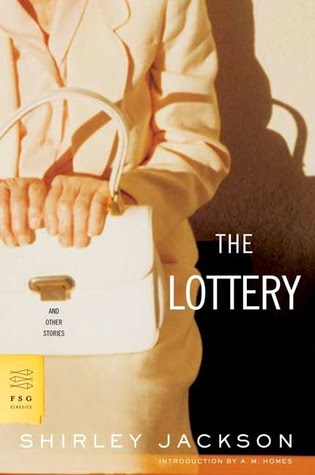
I was assigned The Lottery in my first year English class in college. Technically it's a short story, coming in at just 30 pages, but this story had me completely hooked. When it ended I spent several minutes just staring at the pages. According to Goodreads, "The Lottery, one of the most terrifying stories written in this century, created a sensation when it was first published in The New Yorker. "Power and haunting," and "nights of unrest" were typical reader responses." I can believe it. The Lottery is a story that is all to easy to identify with, which makes it all the more frightening. If you've never read this chilling tale, you should really pick it up. You will not see this ending coming.
I very rarely read non-fiction, so when I was assigned this ethnography of an Iraqi village in an Anthropology course, I was less than thrilled. I mean, the book description is as dry as the Syrian Desert (hehe). But for whatever reason I actually did the assigned reading and I'm glad I did. It was such an adventure to read about Fernea's time in Iraq among the people she met there. Her time with the Sheik was exciting and thrilling at times. The culture is not always what you'd expect and neither are the people. I'd recommend this book if you have any interest at all in other societies (or not, honestly - I didn't). I actually passed this one to my dad who liked it as much as I did!
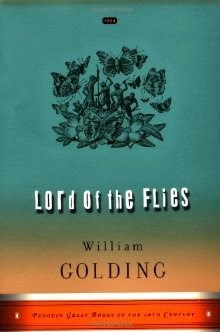
One of the most surprising things to me about twelfth grade English was that most people hated this book. The first thing that came to mind when I heard the title was Lord of the Rings. After I got over being disappointed that it was nothing resembling Tolkien, I greatly enjoyed this book. You know you're in for a ride when an author strands a bunch of young boys on an island. It was grim and thrilling from the get-go. Fun fact: my best friend Lisa (who also really loved this one) and I were the only two students in the class who were able to pick out the sexual references in this book (you can read an essay about them here). Our teacher was extremely impressed and gave us extra credit! Hurray! I recommended this one to my dad too, who was thoroughly disturbed and entertained.
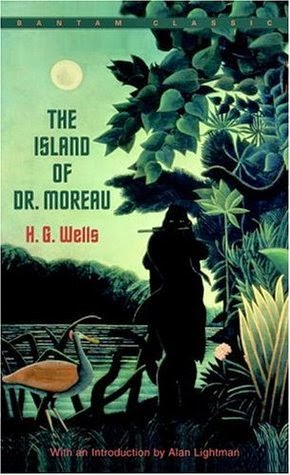
This book... it had me enthralled for days during my ninth grade year. Coming in at only 160 pages, it was a very quick read, but one that has stuck with me for... well, a lot of years. It starts out mild and then heads in a direction that will make you cringe - and it'll be an ugly cringe. The Island of Dr. Moreau goes to a dark place that is all the more scary because it isn't outside the realm of possibility. I am so glad my teacher gave this to us to read instead of making us watch the movie (like she did with Romeo and Juliet) since, from what I hear, the movie was painful. This is the only thing I've ever read by H.G. Wells, but I have a few more on my bookshelf. Maybe it's time to dust them off.
My twelfth grade English teacher really knew what she was doing. She pumped out great book after great book. I really (really) did not have any expectations of actually enjoying Wuthering Heights. All other classics from this era put me to sleep, to be honest. But something about this book captivated me. I also fell in love with the song (as performed by Hayley Westenra). Since my first reading of Wuthering Heights I've started collecting copies, slowly working back in time. My latest edition is from 1923 - a steal I found on eBay. I passed this one off on my dad as well, but he really couldn't get into it. After he finished it and we began our discussion, he was totally shocked to learn that there had been a ghost in the story!
Honorable Mentions:
Were there any assigned books from your educational career (whether high school or college) that you ended up loving? I'd love to hear about them!